We make Aegis Photo Voyager, a desktop photo library that uses local vision models to describe and search photos. We ran this benchmark to decide which models to recommend. Photo Voyager itself is not part of the test: every run calls Ollama directly.
Summary
- The top three models are a statistical tie on quality (~84 ± 3 pts), but differ by 2.7× in speed:
qwen3.5:9b(84.0 ± 2.9),qwen3-vl:8b(83.9 ± 3.4), andqwen3-vl:4b(83.9 ± 2.9) finish within 0.08 points of one another. However,qwen3-vl:8bandqwen3-vl:4bignored Ollama'sthink: falseparameter—emitting 3.5k to 4.5k characters of internal thinking per photo and taking 19.4s–25.2s—whereasqwen3.5:9bhonoredthink: falseand reached the same quality in 9.2s. - Rule-based scoring confirms the ranking without a Qwen judge: Because our text-only judge (
qwen2.5:14b) belongs to the Qwen family and grades 30 of the 100 points, we also scored every model on the 70 rule-based points alone (scaled to 100). On rule-based points alone, the same six models lead, in nearly the same order (qwen3-vl:4bat 88.2 andqwen3-vl:8bat 88.0 swap places 2 and 3):qwen3.5:9b(90.6),qwen3-vl:4b(88.2),qwen3-vl:8b(88.0),gemma3:4b(87.8),gemma3:12b(87.2), andministral-3:3b(85.8). - For batch tagging a large photo library, smaller models cut days of GPU time: On a single RTX 4060 Ti (16GB),
gemma3:4bscores 80.2 ± 3.4 in 4.5s/photo (2× faster thanqwen3.5:9b), andminicpm-v4.6:latestscores 72.9 ± 3.6 in 1.6s/photo (generating 235 tokens/s). - JSON repair still matters in production: Scores from this 8-field benchmark cannot be compared directly to our earlier February 2026 (2026-02-07) 11-field study. However, our prior finding about raw JSON syntax failures still holds:
ministral-3:3bscored 78.3 ± 4.1 here only because our parser repaired broken JSON (primarily raw unescaped line breaks inside string values, which caused 28 of 30 failures forministral-3:8b, whereas doubled{{braces came fromminicpm-v4.6). Only 62% ofministral-3:3b's outputs and 6% ofministral-3:8b's outputs were valid JSON as returned.
Real-World Throughput: Tagging a 50,000-Photo Library on One GPU
Per-photo time mostly reflects how many tokens a model writes (including thinking tokens) rather than raw generation speed. Here is what those per-photo latencies mean when indexing a 50,000-photo personal library on a single RTX 4060 Ti:
| Tier / Use Case | Model | Quality Score (± 95% CI) | Rule-Only Score | Avg Output Tokens | Speed (Tok/s) | Time / Photo | 50,000 Photos (1 GPU) |
|---|---|---|---|---|---|---|---|
| Fastest Batch Indexer | minicpm-v4.6:latest |
72.9 ± 3.6 | 77.6 | 292 | 235.1 tok/s | 1.6s | ~23 hours |
| Best Speed / Quality Balance | gemma3:4b |
80.2 ± 3.4 | 87.8 | 309 | 84.3 tok/s | 4.5s | ~62 hours (2.6 days) |
| Top Quality (No Thinking Overhead) | qwen3.5:9b |
84.0 ± 2.9 | 90.6 | 326 | 43.2 tok/s | 9.2s | ~127 hours (5.3 days) |
| Top Prose (Thinking Always On) | qwen3-vl:8b |
83.9 ± 3.4 | 88.0 | 1,046 (+3.5k ch think) | 45.8 tok/s | 25.2s | ~350 hours (14.6 days) |
Which model should you use?
- Best Overall Default (
qwen3.5:9b@1024px): Reaches the top quality tier (86.0 at 1024px, 87.8 at 2048px) with 100% strict JSON validity in ~8.7s per photo at 1024px, avoiding the 20–25s thinking overhead ofqwen3-vl. - Best Fast Model for Large Libraries (
gemma3:4b@512pxor1024px): Averages 80.2 ± 3.4 in 4.5s per photo using 2.7 GB VRAM with 100% strict JSON validity—cutting 50,000-photo indexing time from 5.3 days (qwen3.5:9b) to 2.6 days. - Best Ultra-Light Model for Low-VRAM Hardware (
minicpm-v4.6:latest@1024px): Runs in 1.6s per photo (235 tok/s) with a 1.6 GB disk footprint, scoring 77.6 at 1024px. - Best When Narrative Prose & Wildlife Species Accuracy Matter Most (
qwen3-vl:4b/qwen3-vl:8b@1024px): Produces the highest-scoring descriptions and was the only family to identify collared peccaries across all four resolutions, at the cost of 17–25s per photo.
Leaderboard
Average of 32 runs per model (8 photos × 4 resolutions) on a 100-point rubric: 70 rule-based points plus 30 points from a local LLM judge. Rule-Only rescales the 70 rule-based points to 100. Differences under about 3 points are within the margin of error.
| Rank | Model | Params | VRAM | Score (±95% CI) | Rule-Only | 256px | 512px | 1024px | 2048px | Time (50k Lib) | Throughput (Out Tok) | JSON (Strict/Rep) | Grade |
|---|---|---|---|---|---|---|---|---|---|---|---|---|---|
| #1 |
Qwen 3.5 (9B)
qwen3.5:9b
|
9.7B (Q4_K_M) | 5380 MB | 84.0 ± 2.9 | 90.6 | 77.9 | 84.3 | 86.0 | 87.8 | 9.2s (127h/50k) | 43 tok/s (326 tok) | 100% / 100% | A |
| #2 |
Qwen 3-VL (8B)
qwen3-vl:8b
|
8.8B (Q4_K_M) | 5525 MB | 83.9 ± 3.4 | 88.0 | 77.5 | 85.4 | 86.7 | 86.0 | 25.2s (349h/50k) | 46 tok/s (1046 tok) (3453 ch think) | 100% / 100% | A |
| #3 |
Qwen 3-VL (4B)
qwen3-vl:4b
|
4.4B (Q4_K_M) | 3364 MB | 83.9 ± 2.9 | 88.2 | 81.5 | 85.5 | 86.0 | 82.5 | 19.4s (270h/50k) | 75 tok/s (1338 tok) (4503 ch think) | 97% / 100% | A |
| #4 |
Gemma 3 (4B)
gemma3:4b
|
4.3B (Q4_K_M) | 2742 MB | 80.2 ± 3.4 | 87.8 | 80.9 | 80.6 | 80.7 | 78.4 | 4.5s (62h/50k) | 84 tok/s (309 tok) | 100% / 100% | A |
| #5 |
Gemma 3 (12B)
gemma3:12b
|
12.2B (Q4_K_M) | 7672 MB | 78.7 ± 4.2 | 87.2 | 76.2 | 80.0 | 78.5 | 80.1 | 12.0s (167h/50k) | 30 tok/s (326 tok) | 100% / 100% | B |
| #6 |
Ministral 3 (3B)
ministral-3:3b
|
3.8B (Q4_K_M) | 2595 MB | 78.3 ± 4.1 | 85.8 | 68.9 | 77.1 | 83.8 | 83.3 | 4.6s (63h/50k) | 99 tok/s (411 tok) | 62% / 100% | B |
| #7 |
Ministral 3 (8B)
ministral-3:8b
|
8.9B (Q4_K_M) | 5380 MB | 75.8 ± 4.5 | 81.2 | 67.0 | 72.7 | 82.2 | 81.0 | 10.4s (144h/50k) | 44 tok/s (434 tok) | 6% / 100% | B |
| #8 |
Gemma 4 (12B)
gemma4:12b
|
11.9B (Q4_K_M) | 7690 MB | 73.4 ± 6.2 | 82.4 | 63.3 | 73.5 | 78.4 | 78.6 | 10.9s (152h/50k) | 29 tok/s (296 tok) | 97% / 100% | B |
| #9 |
MiniCPM-V 4.6
minicpm-v4.6:latest
|
1.2B (Q4_K_M) | 642 MB | 72.9 ± 3.6 | 77.6 | 70.6 | 72.9 | 77.6 | 70.6 | 1.6s (23h/50k) | 235 tok/s (292 tok) | 91% / 100% | B |
| #10 |
Gemma 4 Edge (e4B)
gemma4:e4b
|
8.0B (Q4_K_M) | 3130 MB | 71.6 ± 4.7 | 75.7 | 66.1 | 64.8 | 78.0 | 77.3 | 4.6s (64h/50k) | 66 tok/s (277 tok) | 100% / 100% | B |
| #11 |
Gemma 4 Edge (e2B)
gemma4:e2b
|
5.1B (Q4_K_M) | 1682 MB | 71.1 ± 3.9 | 79.1 | 65.2 | 70.0 | 73.9 | 75.3 | 2.6s (36h/50k) | 116 tok/s (265 tok) | 100% / 100% | B |
| #12 |
Granite 3.2 Vision (2B)
granite3.2-vision:2b
|
2.5B (Q4_K_M) | 1890 MB | 65.3 ± 3.9 | 72.7 | 62.8 | 66.4 | 68.5 | 63.7 | 3.0s (42h/50k) | 113 tok/s (215 tok) | 100% / 100% | B |
| #13 |
MiniCPM-V 2.6 (8B)
minicpm-v:8b
|
7.6B (Q4_0) | 4340 MB | 59.6 ± 3.0 | 62.3 | 58.1 | 59.3 | 59.5 | 61.4 | 6.0s (84h/50k) | 55 tok/s (295 tok) | 25% / 100% | C |
| #14 |
LLaVA 1.6 (13B)
llava:13b
|
13.0B (Q4_0) | 10277 MB | 58.2 ± 3.8 | 64.9 | 57.7 | 62.2 | 55.4 | 57.6 | 9.1s (126h/50k) | 30 tok/s (233 tok) | 97% / 100% | C |
| #15 |
LLaVA 1.6 (7B)
llava:7b
|
7.0B (Q4_0) | 4493 MB | 55.4 ± 4.9 | 62.5 | 54.5 | 52.3 | 56.8 | 57.9 | 5.1s (70h/50k) | 60 tok/s (278 tok) | 81% / 97% | C |
| #16 |
LLaVA-Phi3 (3.8B)
llava-phi3:3.8b
|
4.0B (Q4_K_M) | 3783 MB | 49.0 ± 4.8 | 57.6 | 47.1 | 48.8 | 49.5 | 50.8 | 4.9s (68h/50k) | 88 tok/s (372 tok) | 91% / 100% | D |
| #17 |
Moondream 2 (1.8B) *
moondream:1.8b
|
1.8B (Q4_0) | 1181 MB | 10.5 ± 5.0 | 11.7 | 11.0 | 7.8 | 4.4 | 18.9 | 2.1s (30h/50k) | 205 tok/s (364 tok) | 0% / 47% | F |
- * Footnote on
moondream:1.8b(digest55fc3abd3867, Q4_0): Moondream 2 is a lightweight captioning model not trained to follow multi-key JSON schemas (0% strict JSON, 47% repaired JSON). - Excluded (Did Not Run) —
llama3.2-vision:11b(10.7B, Q4_K_M, digest6f2f9757ae97): Did not run: Ollama 0.30.6 llama-server rejected legacy mllama architecture (HTTP 500). Excluded from numeric rankings rather than scored as 0. - Note on Prior Benchmark Scores: Scores in this table use an updated 8-field rubric and JSON repair pipeline and cannot be compared directly to the 0–100 numbers in our February 2026 11-field study.
Quality vs. time per photo
Each point is one model: average score against average warm time per photo, across all four resolutions. The time axis is logarithmic. moondream:1.8b (10.5 points) is left out to keep the scale readable.
Time per photo by input resolution
Not every model sees a bigger image as more input. Gemma 3 and LLaVA resize every photo to a fixed size internally, so their prompt tokens and time barely change. Qwen, Granite and Ministral turn larger images into many more tokens, which shows most at 2048px.
| Model | 256px | 512px | 1024px | 2048px | Prompt tokens (256 → 2048px) |
|---|---|---|---|---|---|
qwen3.5:9b | 7.3s | 7.9s | 8.7s | 12.8s | 395 → 3419 |
qwen3-vl:8b | 23.8s | 25.5s | 22.4s | 28.9s | 1374 → 3410 |
qwen3-vl:4b | 16.3s | 16.5s | 17.1s | 27.8s | 1374 → 3410 |
gemma3:4b | 4.3s | 4.3s | 4.5s | 4.7s | 615 → 615 |
gemma3:12b | 11.4s | 11.7s | 12.5s | 12.4s | 615 → 615 |
ministral-3:3b | 3.9s | 4.2s | 5.1s | 5.1s | 965 → 1895 |
ministral-3:8b | 9.2s | 10.3s | 10.7s | 11.4s | 965 → 1895 |
gemma4:12b | 10.0s | 10.8s | 11.3s | 11.6s | 398 → 616 |
minicpm-v4.6:latest | 1.3s | 1.6s | 1.6s | 2.1s | 399 → 985 |
gemma4:e4b | 4.0s | 4.4s | 5.0s | 5.0s | 394 → 612 |
gemma4:e2b | 2.2s | 2.4s | 2.8s | 2.9s | 394 → 612 |
granite3.2-vision:2b | 1.9s | 2.5s | 3.4s | 4.3s | 1175 → 7736 |
minicpm-v:8b | 4.9s | 5.6s | 6.4s | 7.3s | 402 → 998 |
llava:13b | 8.9s | 9.2s | 8.9s | 9.4s | 990 → 990 |
llava:7b | 5.2s | 5.2s | 4.7s | 5.2s | 967 → 967 |
llava-phi3:3.8b | 4.6s | 4.4s | 4.1s | 6.3s | 988 → 988 |
The 8 test photos
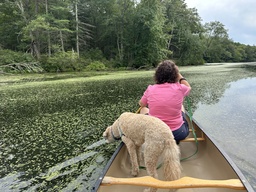
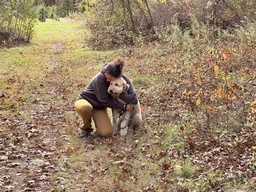
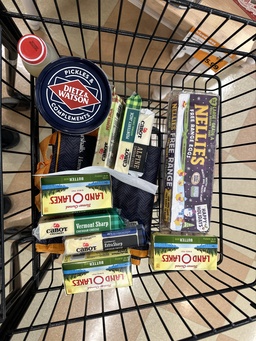
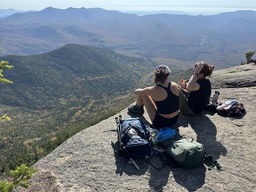
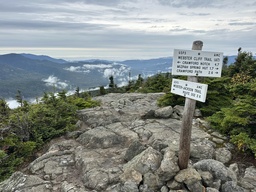
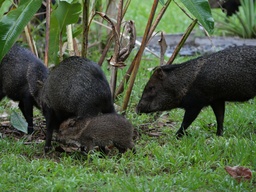
Personal photos, chosen to cover common archetypes in a family library. EXIF and GPS data were stripped, so any location a model names comes from the pixels. Faces were blurred for publication after the runs: the models saw the unblurred originals. Click a photo for a larger version.


Results by photo
Each model's average score per photo, across the four resolutions. Darker cells score higher.
| Model | Augsburg Arch. | Canoeing + Dog | Party Food | Autumn Dog | Grocery Cart | Mountain Vista | Trail Sign OCR | Costa Rica Wildlife | Overall Avg |
|---|---|---|---|---|---|---|---|---|---|
| #1 Qwen 3.5 (9B) | 86.6 | 86.0 | 70.6 | 90.4 | 82.6 | 87.8 | 86.5 | 81.4 | 84.0 |
| #2 Qwen 3-VL (8B) | 84.7 | 87.2 | 69.1 | 89.0 | 80.7 | 88.3 | 89.6 | 82.7 | 83.9 |
| #3 Qwen 3-VL (4B) | 88.1 | 82.6 | 75.0 | 90.5 | 76.4 | 86.6 | 87.8 | 84.2 | 83.9 |
| #4 Gemma 3 (4B) | 83.6 | 83.0 | 78.7 | 85.7 | 82.5 | 87.3 | 76.6 | 63.8 | 80.2 |
| #5 Gemma 3 (12B) | 73.1 | 84.9 | 62.7 | 89.6 | 82.6 | 85.9 | 86.9 | 63.9 | 78.7 |
| #6 Ministral 3 (3B) | 81.3 | 85.1 | 71.9 | 77.5 | 65.4 | 80.3 | 88.0 | 76.7 | 78.3 |
| #7 Ministral 3 (8B) | 77.9 | 83.7 | 62.0 | 81.0 | 65.8 | 82.2 | 79.1 | 74.6 | 75.8 |
| #8 Gemma 4 (12B) | 89.0 | 87.0 | 58.9 | 78.9 | 39.5 | 80.8 | 77.0 | 76.5 | 73.4 |
| #9 MiniCPM-V 4.6 | 72.5 | 85.1 | 62.9 | 83.9 | 65.1 | 75.9 | 66.5 | 71.5 | 72.9 |
| #10 Gemma 4 Edge (e4B) | 80.6 | 80.8 | 61.4 | 75.6 | 52.5 | 80.2 | 65.9 | 75.7 | 71.6 |
| #11 Gemma 4 Edge (e2B) | 74.5 | 84.2 | 64.3 | 66.0 | 56.0 | 77.5 | 76.2 | 70.0 | 71.1 |
| #12 Granite 3.2 Vision (2B) | 62.9 | 81.6 | 56.0 | 74.3 | 54.3 | 74.4 | 67.4 | 52.0 | 65.3 |
| #13 MiniCPM-V 2.6 (8B) | 61.1 | 66.4 | 47.7 | 61.0 | 49.6 | 63.3 | 67.2 | 60.3 | 59.6 |
| #14 LLaVA 1.6 (13B) | 54.2 | 62.5 | 44.9 | 67.2 | 49.5 | 67.3 | 70.1 | 50.1 | 58.2 |
| #15 LLaVA 1.6 (7B) | 62.4 | 46.0 | 43.3 | 61.5 | 52.5 | 66.9 | 64.2 | 46.1 | 55.4 |
| #16 LLaVA-Phi3 (3.8B) | 49.6 | 53.1 | 36.2 | 52.0 | 38.9 | 65.1 | 42.1 | 55.4 | 49.0 |
| #17 Moondream 2 (1.8B) | 12.0 | 31.4 | 3.0 | 19.5 | 0.0 | 0.0 | 12.4 | 6.0 | 10.5 |
A. Performance by Picture Archetype
1. Optical Character Recognition (OCR), Trail Signage & Rotated Grocery Packaging (white_mountains_trail_sign.jpg & shopping_cart.jpg)
These two photographs separate newer vision encoders from older CLIP-based models:
- Mountain Trail Signpost (
white_mountains_trail_sign.jpg): At1024pxand2048px,qwen3-vl:8b(89.6),ministral-3:3b(88.0),qwen3-vl:4b(87.8),gemma3:12b(86.9), andqwen3.5:9b(86.5) read the wooden signboards accurately—extracting "USFS AMC", "Webster Cliff Trail (AT)", "Crawford Notch 4.7", "Mizpah Spring Hut 1.7", and "Webster-Jackson Trail / Route 302 2.6"—and used that text to infer the location as the White Mountains, New Hampshire. In contrast,llava:13b,llava:7b, andllava-phi3:3.8bdid not read any trail names even at2048px. - Upside-Down & Vertical Grocery Labels (
shopping_cart.jpg): This overhead shot inside a wire cart is difficult because the Land O'Lakes Butter boxes are upside-down, the Cabot cheese bars are angled, and the Nellie's Free Range Eggs carton is oriented vertically.qwen3.5:9b(82.6),gemma3:12b(82.6),gemma3:4b(82.5), andqwen3-vl:8b(80.7) read all four brands (Land O'Lakes, Cabot, Nellie's, and Dietz & Watson) and identified the containers (butter boxes, cheese blocks, egg carton, pickle tub). - Why
gemma4:12bStruggled on the Shopping Cart: Althoughgemma4:12bread all three trail sign names on the mountain summit, it averaged 39.5 onshopping_cart.jpg. At256px–512px, it mistook the rectangular packages inside the wire grid for "vintage stickers" or "Listerine mouthwash bottles"; at1024px–2048px, it read the text "Land O'Lakes" and "Free Range Eggs" but misidentified the physical containers as "beverage cans" and "snack packs".
2. Wildlife Species Identification Across Resolutions (wildlife_costa_rica.jpg)
The Costa Rica wildlife photograph shows three collared peccaries (javelinas)—two adults and one juvenile standing beneath the middle adult—foraging in tropical grass. Species identification varied strongly with resolution:
- Consistent Across All Resolutions: Only
qwen3-vl:4b(84.2) andqwen3-vl:8b(82.7) identified peccaries / collared peccaries at all four resolutions from256pxto2048px. - High-Resolution Dependent (1024px+):
qwen3.5:9b(81.4) called them wild boars/pigs at256px–512pxbefore switching to collared peccaries at1024pxand2048px. Similarly,gemma4:12b(76.5) said capybaras at256pxand wild boars at512px, then identified peccaries at1024pxand2048px.gemma4:e4b(75.7) identified peccaries only at2048px. - Single-Resolution Hits & Wild Boar Generalizations:
ministral-3:3b(76.7) got peccary once (at256px) and otherwise said wild boars/pigs.ministral-3:8b(74.6) said wild boar at every resolution (256px–2048px), andminicpm-v4.6(71.5) said wild boars/pigs from512pxupward. - The "Capybara" Misclassification:
gemma3:4b(63.8) said wild pigs at256pxand correctly identified collared peccaries at512px, but regressed to capybaras at1024pxand2048px.gemma3:12b(63.9) said wild boars at256pxand capybaras from512pxto2048px.
3. Cluttered Catering Spread & Napkin Text (food_snacks.jpg)
The overhead party food spread had the lowest average scores across models (60–79 points) because it contains over a dozen distinct items across multiple trays (strawberries and dried apricots around a dip bowl, green and red grapes, cheese cubes and slices, salami/pepperoni, multiple cracker trays, wrapped cutlery in white bowls, black-and-gold dotted plates, a gold star centerpiece, and printed napkins):
- Best Food & Tableware Inventory:
gemma3:4b(78.7),qwen3-vl:4b(75.0),ministral-3:3b(71.9), andqwen3.5:9b(70.6) listed the largest share of food items and tableware without inventing non-existent items like cakes or wine glasses. - Reading "1975" vs. Guessing the Event: No model output contains "50th" or "Happy Birthday" from the printed napkins. However, the Qwen 3 models read the upside-down year "1975" printed on the black-and-gold napkins—
qwen3-vl:4bandqwen3-vl:8bfrom512pxupward, andqwen3.5:9bat1024px–2048px—and guessed a birthday or anniversary celebration.gemma3:4balso guessed a "milestone birthday" from the black-and-gold decor without reading any text.
4. Human-Animal Bonding, Body Posture & Architecture (person_with_dog.jpg, canoeing.jpg, augsburg_city_hall.jpg)
- Human-Pet Scenes (
person_with_dog.jpg&canoeing.jpg): Photographs of people with pets scored highest across almost all models (90.5 forqwen3-vl:4band 90.4 forqwen3.5:9bonperson_with_dog.jpg; 11 models above 80 oncanoeing.jpg), capturing posture details such as the person kneeling on one knee with eyes closed resting their head against the dog's head. - Historic European Architecture (
augsburg_city_hall.jpg):gemma4:12bachieved the highest score on this photo (89.0), followed byqwen3-vl:4b(88.1) andqwen3.5:9b(86.6), describing both the Renaissance facade (twin green copper onion domes and pediment crest) and the active renovation (tower crane, scaffolding, street barriers).
B. Field-by-Field Strengths: Objects vs. Actions vs. Descriptions
- Object Detection (
objects/20):qwen3.5:9bleads (17.38/20), followed byministral-3:3b(16.74/20),gemma3:12b(16.49/20), andqwen3-vl:8b(16.31/20).minicpm-v4.6:latest(1.2B parameters) scores 15.99/20 on objects. - Action Understanding (
actions/10):gemma3:4b(9.69/10),ministral-3:3b(9.45/10), andminicpm-v4.6:latest(9.14/10) score higher than the Qwen models (8.20–8.44/10) on action extraction. The Qwen models often return empty action lists[]on static scenes and omit implied activities like "celebrating" on the party food table, whereasgemma3:4bandministral-3:3binclude both physical actions (paddling, kneeling, hugging, foraging, sitting) and contextual activities (shopping, renovating, celebrating). - Brief Summaries & Long Descriptions:
qwen3-vl:4b(11.90/15 short, 16.80/20 long) andqwen3-vl:8b(11.67/15 short, 16.85/20 long) achieve the top prose scores, whileqwen3.5:9b(10.85/15 short, 15.80/20 long) andministral-3:8b(9.88/15 short, 15.24/20 long) lead among models that do not emit thinking traces.
Method and limitations
Test Environment (2026-11-14)
- Hardware: AMD Ryzen 9 5950X (16 cores), 128GB DDR4 RAM, NVIDIA GeForce RTX 4060 Ti (16,380 MiB VRAM).
- Software: Ubuntu 24.04 LTS, Python 3.12, Ollama 0.30.6.
- Dataset: 8 photographs resized via Lanczos resampling to
256px,512px,1024px, and2048pxalong the longest edge (JPEG quality 85). All EXIF and GPS metadata were stripped from the source files so location inference relies only on visual content. Note: The benchmark runs were executed against the original unblurred photographs; visible human faces inperson_with_dog.jpg,two_people_white_mountains_vista.jpg, andaugsburg_city_hall.jpgwere blurred afterward for privacy in the published repository and article. - Execution Protocol: Before each model's 32 runs, all loaded models were evicted from VRAM (
keep_alive: 0) and a warmup request was executed so cold disk-load time was excluded from warm inference timing. Requests usedtemperature: 0.1,num_ctx: 8192,num_predict: 3072, andthink: false.
Hybrid Scoring & Judge Verification (70 Rule-Based Points + 30 Judge Points)
Each response was parsed with src/json_utils.py (recording whether the raw output was valid JSON as returned or required syntax repair) and scored out of 100 against human ground truth (config/ground_truth.json):
- Rule-Based Points (70 points): Deterministic synonym/stem matching for
objects(20 pts),tags(15 pts),actions(10 pts),mood(5 pts),category(5 pts), location keywords (5 pts), and length/subject checks ondescription_short(5 pts) anddescription_long(5 pts), minus penalties for hallucinated trap words (-3 pts each) and broken JSON requiring syntax repair (-2 pts). - LLM-as-a-Judge Points (30 points):
qwen2.5:14b(attemperature: 0.0) gradeddescription_short(10 pts),description_long(15 pts), and semanticlocation(5 pts), plus up to -6 pts for fabricated details. - Accounting for Judge Family Bias: Because
qwen2.5:14bis a text-only model from the Qwen family (it compares extracted text against our written ground truth and never sees the image), we also report the Rule-Only Score (the 70 deterministic points scaled to 100) in the leaderboard. On rule-based points alone, the same six models lead, in nearly the same order (qwen3.5:9b90.6,qwen3-vl:4b88.2,qwen3-vl:8b88.0,gemma3:4b87.8,gemma3:12b87.2,ministral-3:3b85.8).
Known Limitations & Caveats
- Statistical Precision (±3–6 pts): Each model was evaluated across 32 runs (8 photos × 4 resolutions). With per-photo score standard deviations of 8–15 points, the 95% confidence interval on a model's overall average is roughly ±3 to ±6 points. Differences under ~3 points (such as Ranks 1–3 at 84.0 vs. 83.9, or Ranks 4–6 at 80.2 vs. 78.3) are statistical ties.
- Single Run per Cell: Each
(model, photo, resolution)combination was run once attemperature=0.1without multi-seed repeats. - Small Corpus & Author Ground Truth: The test corpus consists of 8 personal photographs with ground-truth checklists written by the project author, tested on a single GPU.
- Non-Comparability with the February 2026 Study: Our earlier benchmark (published 2026-02-07) tested an 11-field schema with a stricter parser and a different scoring script. Scores from this study (49–84) cannot be compared numerically to scores from that earlier study (0–43).
- How VRAM Is Measured: The VRAM column reports
size_vramfrom Ollama's/api/psendpoint with an 8192-token context window. For split vision architectures likeminicpm-v4.6:latest(1.6 GB on disk), Ollama's/api/psreports only the language model weights + KV cache insize_vram(642 MB), omitting the vision projector weights.
What we set out to answer
Personal photograph collections contain private data: faces of family members, home interiors, travel timelines, and everyday life. Sending tens of thousands of personal photos to cloud APIs adds per-image fees, upload bottlenecks, and privacy risks. Running vision LLMs locally via Ollama on a consumer GPU avoids those trade-offs if local models are fast and accurate enough.
This benchmark answers six questions for local photo indexing in late 2026:
- 1. Best Models Under 16GB VRAM: How do newer vision models (
Qwen 3.5,Qwen 3-VL,Gemma 4,MiniCPM-V 4.6,Ministral 3) compare against earlier models (Granite 3.2 Vision,Gemma 3,LLaVA)? - 2. Speed vs. Quality & Resolution Trade-off: How much quality do you gain—and how much speed do you lose—across
256px,512px,1024px, and2048pxinputs? - 3. Brief Summaries & Long Descriptions: How well do local models write a one-sentence summary (
description_short) and a multi-sentence scene description (description_long)? - 4. Structured Metadata Fields: How accurately do they extract
tags,objects, inferredlocation/setting,actions,mood, andcategory? - 5. Picture & Object Specializations: Which models handle OCR on signs and labels, wildlife species identification, cluttered food tables, or human-pet actions best?
- 6. Reproducible Code & Viewer: Provide an open-source runner, evaluator, and local HTML viewer that anyone can run on their own machine.
This updates our February 2026 benchmark of six models, which used a different schema and scoring, so the two sets of numbers can't be compared directly.